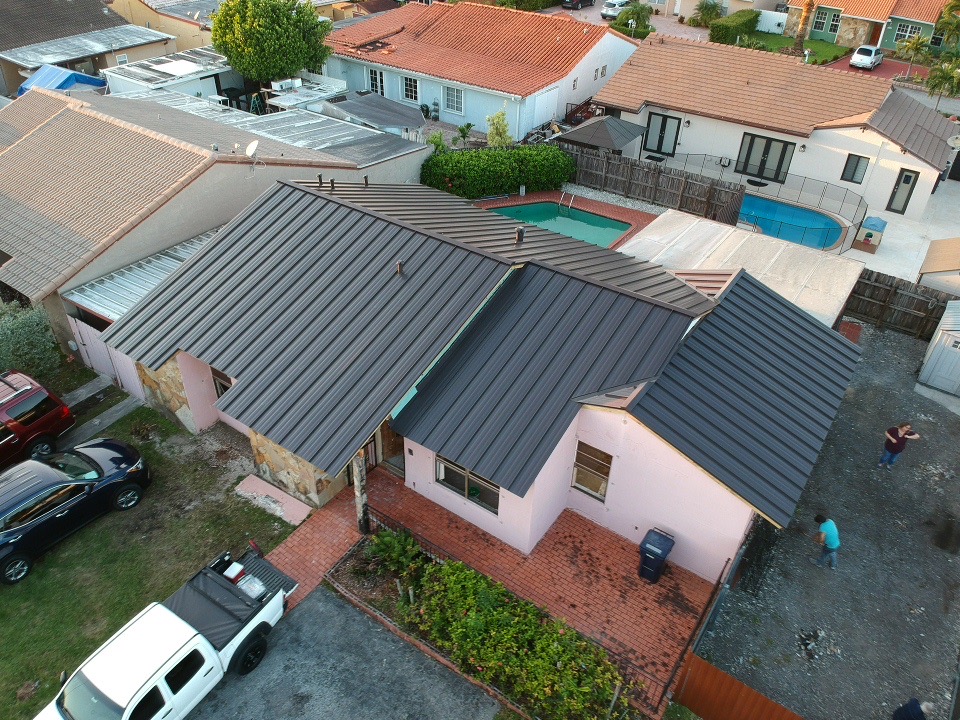
Are metal roofs energy efficient? Ask the question and you will hear a confident yes from some sources and a careful “it depends” from others. Both have a point. Metal can be an excellent roofing material for keeping a building cool, but the savings do not come from the metal alone. They come from how much sunlight the surface reflects, how well it sheds heat, and what sits between the roof and the living space. This guide explains the main ideas, what a well-known Florida study found, and how to judge a claim before you rely on it.
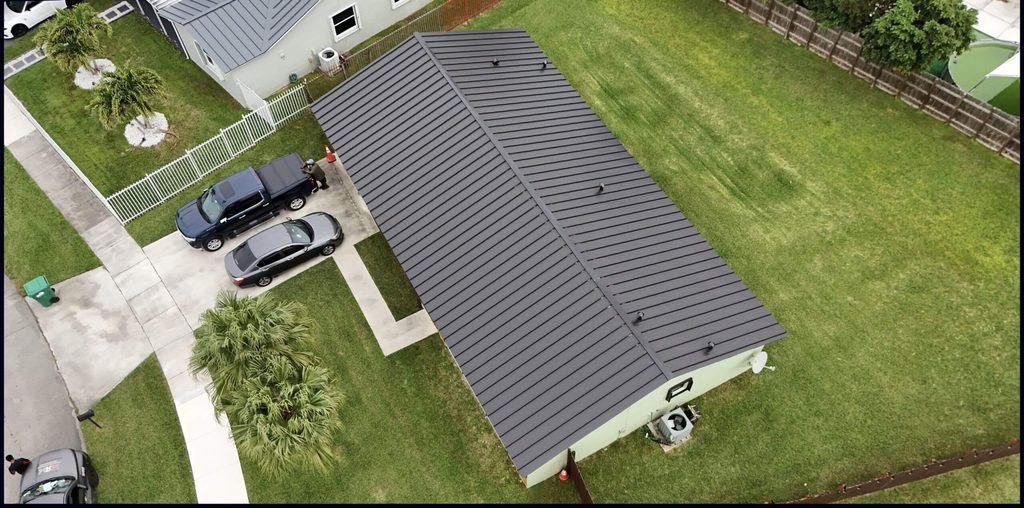
Start With Two Properties
When engineers describe how a roof handles the sun, they use two measurements.
- Solar reflectance. This is the share of sunlight a surface reflects instead of absorbing. A roof with high solar reflectance stays cooler in the sun.
- Thermal emittance. This is how well a surface gives off heat as infrared radiation. A roof with high emittance sheds absorbed heat more readily.
The U.S. Department of Energy describes a cool roof as one that reflects more sunlight and absorbs less, and notes that most cool roofs also have high thermal emittance. It compares the idea to wearing light-colored clothing on a sunny day. Under the same sun, the department says, a conventional roof can reach 150°F or more on a summer afternoon, while a reflective roof could stay more than 50°F cooler.
Here is the point that surprises people: according to the same Department of Energy page, unpainted metals are good solar reflectors but poor thermal emitters, so bare metal is not the department’s first recommendation for a cool roof. What makes a metal roof perform in the sun is usually its coating or paint, not the bare steel or aluminum underneath.
Cool Metal Roofing: What the Term Means
There is no single legal definition of a cool roof. The Department of Energy says qualifications vary by standard or program, location, building type and roof slope. In practice, cool metal roofing usually means a metal panel with a coating or paint system that has been tested for solar reflectance and thermal emittance.
The Cool Roof Rating Council (CRRC) maintains a Rated Products Directory that lists solar reflectance and thermal emittance values for thousands of roofing products. If a manufacturer claims a solar reflectance metal roof rating, you can look for a rated value instead of relying on a brochure’s adjectives.
Three habits make claims easier to judge:
- Ask for the tested values, not just the word “cool.”
- Check whether the values are initial or aged, since surfaces change with weather and dirt.
- Confirm that the number applies to the exact color and finish you are buying.
Reflective Roof Coatings and Dark Colors
Most of the energy performance of a painted metal roof sits in the paint. Reflective roof coatings are formulated to bounce more sunlight back, and the pigments used determine how much a color reflects. Light colors reflect the most. Dark colors usually reflect less, which is why a dark roof is generally hotter than a light one on a sunny day.
That does not make a dark metal roof a poor choice. It means the roof system around it matters more. Some manufacturers offer dark colors made with reflective pigments that reflect more sunlight than a conventional dark pigment of the same shade. Whether a given product does is something to confirm in writing, with test values, not to assume.
What a Florida Study Found
The best-known measured data for hot, humid climates comes from the Florida Solar Energy Center. In a study published in November 2000 (FSEC-CR-1220-00), researchers compared seven side-by-side homes in Fort Myers, Florida, over July 8 to 31, 2000. The homes were unoccupied, each had R-19 ceiling insulation, and each had a different roof: standard dark shingles as the control, light shingles, a sealed attic with roof-deck insulation, white tile roofs, terra cotta tile and a white metal roof.
The reported results:
- The control home’s attic reached a peak summer-hour temperature about 40°F above the outdoor air temperature. The highly reflective roofs stayed no hotter than the outside air.
- The white metal roof showed 29.4 percent measured cooling energy savings and a 39.7 percent demand reduction over the test period.
- Other systems fell between: light shingles saved 10.2 percent, a sealed attic saved 13.5 percent, and terra cotta tile saved 5.9 percent.
- For a typical South Florida home, the authors estimated the white metal roof would save about 1,610 kilowatt-hours a year, around 23 percent of cooling use.
These are real numbers, and they show that a highly reflective roof can make a big difference in a hot climate. They also come with limits. The study was done at one site, for one month, in unoccupied homes. The white metal roof was a highly reflective one, so the results say little about dark roofs. And the study was funded by Florida Power & Light with the Department of Energy, which the authors disclose. Treat the figures as one well-documented data point, not a guarantee for any particular house.
Metal Roof Energy Savings: What Else Matters
A roof’s surface is only one part of how much heat reaches a house. Several other factors decide actual metal roof energy savings:
- Attic ventilation. Moving hot air out of the attic reduces how much heat builds up under the roof.
- Insulation. Ceiling insulation slows heat flow from the attic into the living space. The Florida study found a sealed attic with roof-deck insulation also saved energy, though less than a highly reflective roof.
- Underlayment and air gap. The layers under metal panels, and the gap between the panels and the deck, affect heat transfer. Some underlayments use reflective or radiant barrier properties.
- Air conditioning efficiency and use. A house with a more efficient system saves less in absolute terms from a cooler roof.
- Climate. The Department of Energy notes that cool roofs deliver the greatest cooling savings in hot climates, while in cold climates a winter heating penalty can outweigh them.
This is why a good answer to “are metal roofs energy efficient” always comes with a follow-up question: compared with what, and in which house?
Caveats the Department of Energy Raises
The Department of Energy page is useful partly because it lists the downsides:
- Savings depend on climate, insulation, roof type and HVAC efficiency.
- A cool roof can cause a heating penalty in winter.
- Converting a good existing roof to a cool roof can be expensive.
- In warm, moist places, algae or mold stains can show more on light roofs.
None of these is a reason to avoid a reflective roof in a hot climate. They are reasons to look at your own house instead of a generic claim.
A Simple Way to Judge a Claim
So, are metal roofs energy efficient enough to justify the claim on a brochure? Use the steps below.
When a supplier or contractor says a roof is energy efficient, try this short sequence:
- Ask what the claim is based on. A tested solar reflectance and emittance value is stronger than a general statement.
- Check the product, color and finish. A rating for one color does not apply to another.
- Ask about the whole system. Underlayment, ventilation and insulation belong in the conversation.
- Ask what is guaranteed. Energy savings usually are not, and a supplier who promises a specific percentage is guessing.
- Compare against your own bills. Your house, your insulation and your air conditioning decide the real result.
Common Misconceptions
“Are metal roofs energy efficient by default?” No. Efficiency depends on the coating and the system, not the metal alone.
“Any metal roof is a cool roof.” Bare metal reflects well but sheds heat poorly. The coating decides how a painted metal roof performs.
“A dark roof will always make the house hot.” A dark roof absorbs more sunlight, but ventilation, insulation and underlayment decide how much heat enters the house.
“The study proves metal saves 30 percent.” The 29.4 percent figure was a one-month measurement on a white metal roof in unoccupied test homes in one Florida city. It is evidence, not a promise.
“Reflective means maintenance free.” Surfaces collect dirt and age, which can change reflectance over time.
Where to Go Next
For related reading on this site, see our guides on metal roofing in humid climates, roof ventilation basics for metal roofing, and what PPGL and the PVDF coating mean. For installation and local options in Miami-Dade, visit metalroofmaster.com. For coated steel coil, see mrmsteel.ai.
Frequently Asked Questions
Are metal roofs energy efficient? They can be, especially in hot climates, when the panel has a reflective coating and the roof system includes good ventilation and insulation. Bare metal alone is not what delivers the savings.
What is cool metal roofing? It is a metal roof with a coating or paint system that has been tested for high solar reflectance and thermal emittance. Programs and standards define it in different ways.
What is solar reflectance on a metal roof? It is the share of sunlight that the roof surface reflects instead of absorbing. A higher value means a cooler roof under the same sun.
How much can a metal roof save on cooling? It depends on the house and the roof. A Florida Solar Energy Center study measured 29.4 percent cooling energy savings for a white metal roof over one July test period, but results vary by house, climate and roof color.
Is a dark metal roof a bad idea in a hot climate? Not necessarily. Dark colors reflect less sunlight, so ask about reflective pigment options and focus on ventilation, underlayment and insulation.
Leave a Reply